27 April 2026
|
Advertorial
With regulations around greenhouse gas emissions going into effect across Europe – and around the world – heat pump manufacturers are shifting many of their systems into next-generation designs leveraging R290 as a lower global warming potential (GWP) refrigerants.
Because of the potential volatility of propane gas, these systems also require leak detection systems designed to perceive a refrigerant leak in the system and activate mitigation systems before flammable concentrations can be reached.
These new regulations – such as UL 60335-2-40, IEC/EN 60355-2-40 – are now going into effect, even if the shift has been building for several years.
SHIFT TO LOW-GWP REFRIGERANTS DECADES IN THE MAKING
The shift toward lower-GWP refrigerant systems has been brewing for a number of years, and takes its roots back to the late 1980s, when the United Nations’ Montreal Protocol pushed to phase out chlorofluorocarbons (CFCs), which were used in HVAC systems, aerosols, and other industrial applications, but were also depleting the earth’s ozone layer.
What companies shifted to were hydrofluorocarbons (HFCs) - compounds that do not harm the ozone layer but carry a high global warming potential (GWP). This tradeoff eventually prompted further regulatory action, culminating in the Kigali Amendment, which the United States ratified in 2022. This amendment mandates a global phase-down of HFCs, targeting an 80–85% reduction in developed countries by the late 2040s.
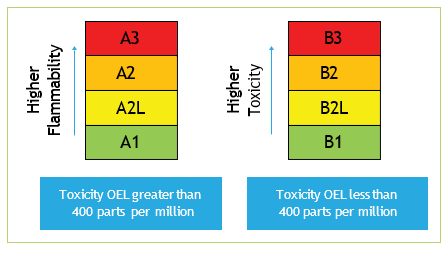
While the United States is shifting towards A2L refrigerants, Europe is preparing to reduce GWP even further and shift towards A3 refrigerants. R290 - also known as propane - is the main candidate with its excellent thermodynamic properties for HVAC systems. The challenge around both of these new compounds is that while they have a reduced GWP, they are also flammable.
Under ISO 817, refrigerants are classified by both flammability and toxicity:
- The refrigerant concentration must exceed a critical threshold.
- An ignition source must be present.
To mitigate this risk, the UL/IEC 60335-2-40 standard was developed. The standard mandates leak detection and mitigation to prevent refrigerant concentrations from reaching dangerous levels.
DIFFERENCES BETWEEN A2L AND A3 GASES
There are two key differences in terms of understanding the differing leak detection requirements for R290/A3 refrigerants as compared to A2L-level options. The first of which – tying back to their ISO classifications – are that A3 gases are significantly more flammable – with an LFL based on volume in air (% v/v).
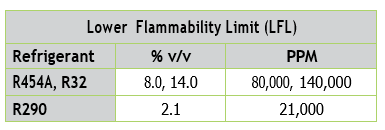
As standards under UL 60335-2-40, IEC/EN 60355-2-40 have put the safety margin at 25% of the lower flammability limit (LFL) for a given refrigerant, that difference is multiplied – putting a significantly higher accuracy burden on the leak detection system to activate when such a small amount of refrigerant represents the mitigation threshold.
From a regulatory standpoint, any system in Europe with a charge of more than roughly 140 grams requires a leak detection sensor – which means that it will be required on nearly every heat pump or HVAC system other than smaller water heater platforms.
The need for accuracy and widespread use have led to Sensata’s development of leak detection systems designed around A3 refrigerants.
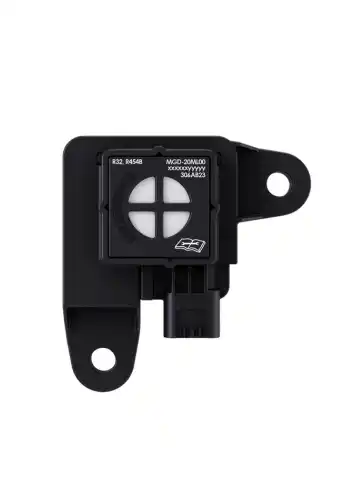
The Sensata SGD Series sensor uses non-dispersive infrared technology to detect the presence of refrigerant in the system – generally near the evaporator coil where leaks are most likely to occur. Designed to comply with IEC 60335-2-40:2022, it has a 15-year lifetime and covers an LFL range from 0 to 100%. It also delivers the reliability needed to monitor flammable A3 compounds, with an accuracy of ±2.5% LFL out of the box at nominal conditions and ±5% LFL over its life and environmental range.
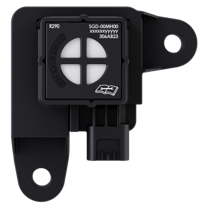
In addition to CE marking and UL compliance, these sensors meet the stringent requirements for use in explosive atmospheres under the ATEX directive, demonstrating full conformity with both European and North-American safety, health and environmental protection standards. This ensures that OEMs can meet both North American and European regulatory demands with confidence.
A3 GASES CONTINUE SUSTAINABLE MOVEMENT
While they do require tighter monitoring for refrigerant leaks, R290 heat pump and HVAC systems also deliver a much lower GWP than even the newer A2L refrigerants used in different parts of the world.
While still significantly lower in greenhouse gas impact than prior refrigerants, A2L refrigerants still have GWP figures generally between 148 and 675. By contrast, R290 has a GWP value of just 3.
The GWP of the refrigerant is just one piece of the overall environmental impact of an HVAC system – which also needs to look at overall energy efficiency and other factors – but the overall arc of product development continues to push HVAC systems toward a more sustainable future – a direction other industries should aim to follow in the near future.
Sensata Technologies has discussed the transition to A2L/A3 refrigerants in a webinar focused on next‑generation sensor technologies enabling safer, more reliable, and regulation‑ready HVAC/R leak detection. Watch the on-demand webinar HERE.