21 April 2026
|
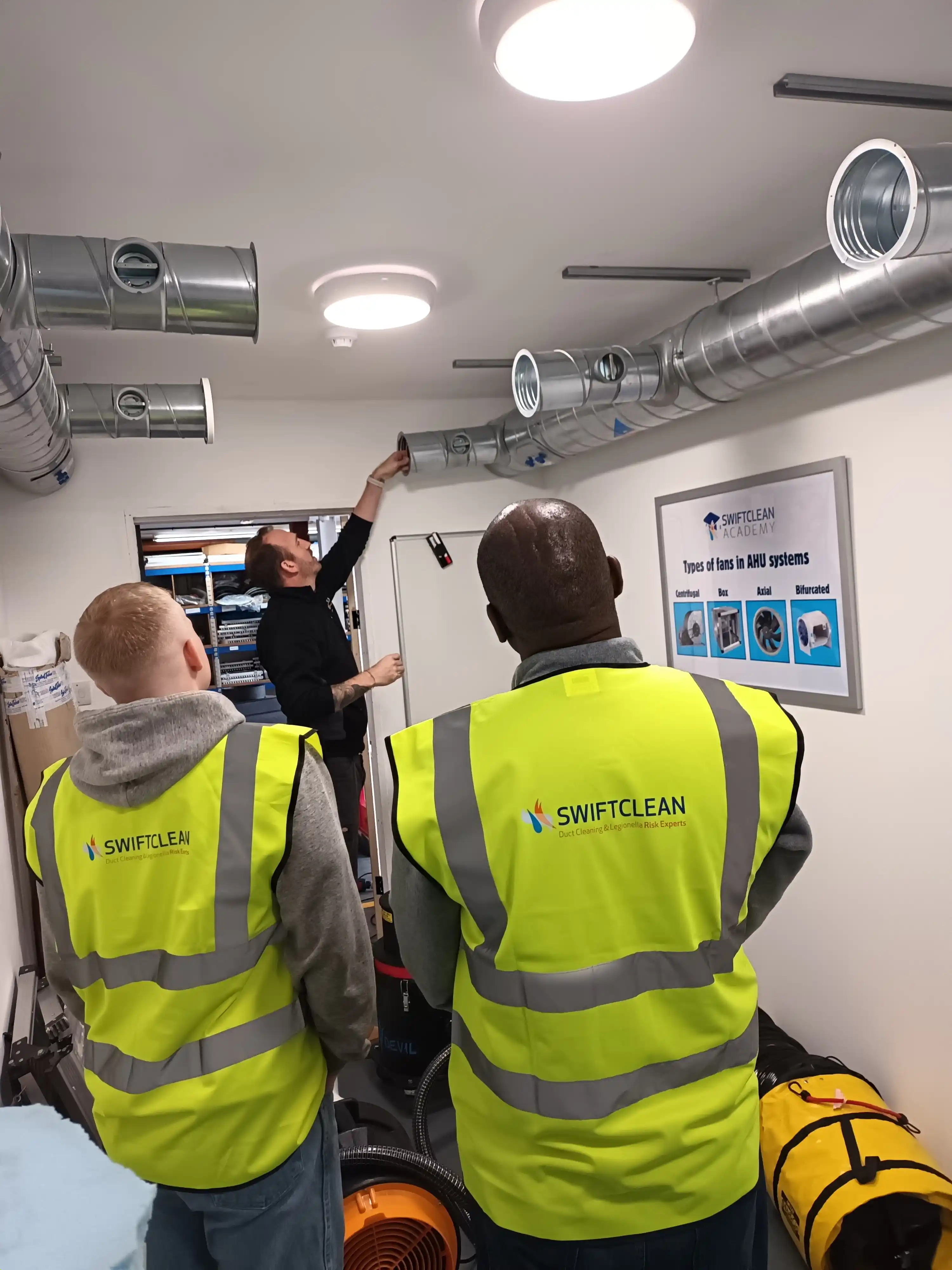
With a new certification pathway for ventilation hygiene and continued regulatory focus on building safety and indoor air quality, Gary Nicholls, Managing Director of Swiftclean and co-author of BESA TR19® Air, explores the shift from reactive to predictive maintenance and how FMs and contractors can ensure compliance.
Ventilation hygiene is central to building health, safety and performance. Dirty ductwork harbours airborne contaminants such as dust, pollen, bacteria and mould spores, circulating them through the air where people work and live. Debris from construction or industrial processes or general operation can build-up over time, restricting airflow, affecting air quality and negatively impacting HVAC energy efficiency.
When you consider that the internal surface area of a ventilation system is roughly equivalent to 10% of the floor space they serve, the case for regular cleaning is compelling. However, it is often overlooked. Ductwork gets cleaned when something goes wrong, or on a fixed maintenance schedule with little regard for system condition, occupancy or usage patterns.
With the publication of TR19® Air1 in April 2024 and the launch of the Vent Hygiene Register (VHR) Air certification pathway in March this year, the industry now has a clear specification for ventilation hygiene and a robust certification scheme to support competence and compliance. It also marks a shift in how ventilation maintenance is approached, from reactive or routine intervention towards a more predictive model based on risk and system condition.
TR19® Air
TR19® published by the Building Engineering Services Association (BESA) sets out the specification against which ventilation ductwork must be tested, inspected and cleaned. The first edition was published in 2005, with a second edition following in 2014 to reference BS EN 15780:2011, the British and European standard for ventilation system cleanliness.
Over time, it became clear that kitchen extract ductwork and general ventilation systems each warranted their own dedicated specification. TR19® Grease addressed the former in 2019, establishing the fire risk management of grease accumulation within kitchen extraction system as a recognised f ire safety prevention measure. TR19® Air was first published in 2024 and together the two documents provide a robust framework for managing both fire risk and indoor air quality in commercial, residential and industrial buildings.
Meeting the requirements
At the heart of TR19® Air is a risk-based approach to cleanliness classification. In accordance with BS EN 15780, systems are categorised as high, medium or low based on the purpose and function of the spaces they serve. A building can have multiple classifications for different zones, for example, a ventilation system supplying a hospital operating theatre or pharmaceutical laboratory would be classified as high, whereas general office or educational environments typically fall into the medium category. Spaces such as plant rooms and storage areas are classified as low.
The classification determines both the frequency of inspection and the point at which cleaning becomes mandatory in compliance with TR19®Air. Post-clean, all systems must first and foremost be visually clean and high cleanliness class systems must meet a cleanliness level of less than 0.3 g/m² using the European Vacuum Testing method, which provides a measurable, verifiable standard rather than a subjective visual judgement.
Building safety standards are changing
The Building Safety Act 2022 has brought monumental changes to building safety, maintenance, accountability and record keeping. One of the Act’s most important principles is the requirement for auditable evidence of building services, systems and maintenance; what the industry refers to as the ‘golden thread’ of information. TR19® Air and the VHR directly support this requirement by providing the framework within which that evidence can be generated and retained.
Employers are bound by the Health & Safety at Work Act etc 1974 and the Occupiers Liability Act 1984 to provide a safe and healthy environment, including adequate supply of fresh or purified air. HVAC systems must be regularly inspected and ductwork cleaned as appropriate and subject to ‘a suitable’ system of maintenance, which is defined by TR19® Air and BS EN 15780. Additional requirements may apply to some settings, for example, accommodation and public facilities, or hospitals, where HTM 03-01 sets more stringent requirements for ventilation performance and cleanliness.
In addition to legal obligations, many insurance providers will require evidence of TR19® compliance in the event of a claim. Non-compliance puts policies at risk and may leave businesses financially liable.
Importantly, TR19® Air and DW145 specifically addresses the inspection, testing and maintenance of fire dampers within ventilation systems; critical devices that control the spread of smoke and f lames. When fire dampers fail, the absence of compliant, ‘golden thread’ maintenance records could leave responsible parties exposed on many fronts.
Make maintenance predictive, not reactive
Perhaps the most significant development alongside TR19® Air is the formal certification pathway introduced through the Ventilation Hygiene Register (VHR) Air category, operated by BESCA, the certification arm of BESA. Contractors can join the scheme, which provides clear instruction when it comes to certifying ventilation system inspections and cleans demonstrating competence and compliance, a bit like the Gas Safe register for works associated with Gas.
Under the VHR Air framework, ventilation system inspection and cleaning must be certified by a registered member contractor. A post-inspection or post-clean verification report together with before and after photographic evidence of system condition must be provided, creating an auditable record that directly supports Building Safety Act compliance. Over time, this record enables responsible parties to identify trends, anticipate deterioration and schedule cleaning at the point it is actually needed, reducing costs and improving building health.
Invest in competence
VHR members must employ competent technicians who hold recognised BESA qualifications. Two training courses provide the formal competency assessment framework that underpins VHR certification:
- Air Hygiene Operative (AHO): This threeday course is designed for technicians carrying out inspection, access and cleaning activities. Training covers everything from system recognition and safe access to cleaning methods and sustainability practice, in accordance with the TR19® Air specification. Candidates are assessed on both theory and practical activities to ensure their work and knowledge meets the standard required for VHR-certified outputs.
- Air Hygiene Technician (AHT): This two-day upskill course is aimed at those working in supervisory and managerial roles, for example, overseeing teams, developing risk assessments and verifying cleanliness post-clean. Training extends into system risk assessment, hazardous contamination, waterborne contaminants in air handling units and the commercial and legal implications of compliance failures. It equips supervisors to lead by example, manage the full scope of a TR19® Air-compliant programme and carry accountability for the quality and integrity of certified outputs.
Best practice advice
Contractors carrying out compliant ventilation hygiene works should address the following areas:
- Define cleanliness quality class: Agree on the cleanliness class for each stem and document it.
- Plan access: Ensure sufficient access panels are installed for inspection and cleaning.
- Schedule regular inspections: Follow TR19 Air’s recommended intervals and adjust based on risk assessment.
- Verify cleanliness: Use visual and quantitative methods to confirm compliance.
- Document everything: Maintain detailed records, including inspection and post-clean reports, photographs, and schematic drawings.
- Demonstrate competence: Choose BESA accredited training and join the VHR.
Ventilation hygiene has always been important for the health of commercial and public buildings, but TR19® Air and the VHR Air certification pathway have raised the bar, providing a robust and independently verified framework for good practice and compliance. I would encourage contractors to embrace these developments; get trained, join the VHR and adopt verifiable, predictive maintenance as standard practice.
Source