23 April 2026
|
Advertorial
Supporting the transition of the HVAC-R sector requires investment in innovative technologies and services such as those developed by A-Gas, a global leader in Lifecycle Refrigerant Management (LRM). “We work to reduce the risk of serious environmental harm caused by refrigerant gases with high ozone-depleting and global warming potential,” explains Elvira Nigido, Group Sustainability Compliance Manager.
By 2050, demand for refrigeration could at least triple, potentially leading to almost double the greenhouse-gas emissions compared to 2022 levels (UNEP, Global Cooling Watch 2025). How can the dynamics of the HVAC-R sector be rethought from a sustainability perspective? Two complementary pathways can help reduce the environmental impact of refrigerant gases. The first involves the circular management of existing refrigerants, which can be recovered and reclaimed. The second is the adoption of low-GWP (Global Warming Potential) alternatives.
A-Gas, operates along both directions. “As our Sustainability Report explains, historically at A-Gas we were a re-packer and supplier of virgin refrigerants. Over the years, we have been transitioning and differentiating our value proposition to become a market leader in championing refrigerant circularity and enabling the supply of lower-GWP replacements”, says Elvira.
Refrigerant gases: The evolution of regulation
In line with global commitments and EU’s recent regulatory changes; Defra launched a consultation last year proposing a preferred “highambition” option that would accelerate the currently legislated reduction steps from 2027 onwards, reaching an 83.8% cut in quota levels by that year and culminating in a 98.6% reduction by 2048.
However the significant quota cuts are raising concerns within the HVAC-R industry as it fails to include critical support mechanisms — such as enhanced recovery and reclamation processes or specialized technical training — necessary to manage the shift away from virgin refrigerants effectively.
How lifecycle refrigerant management works
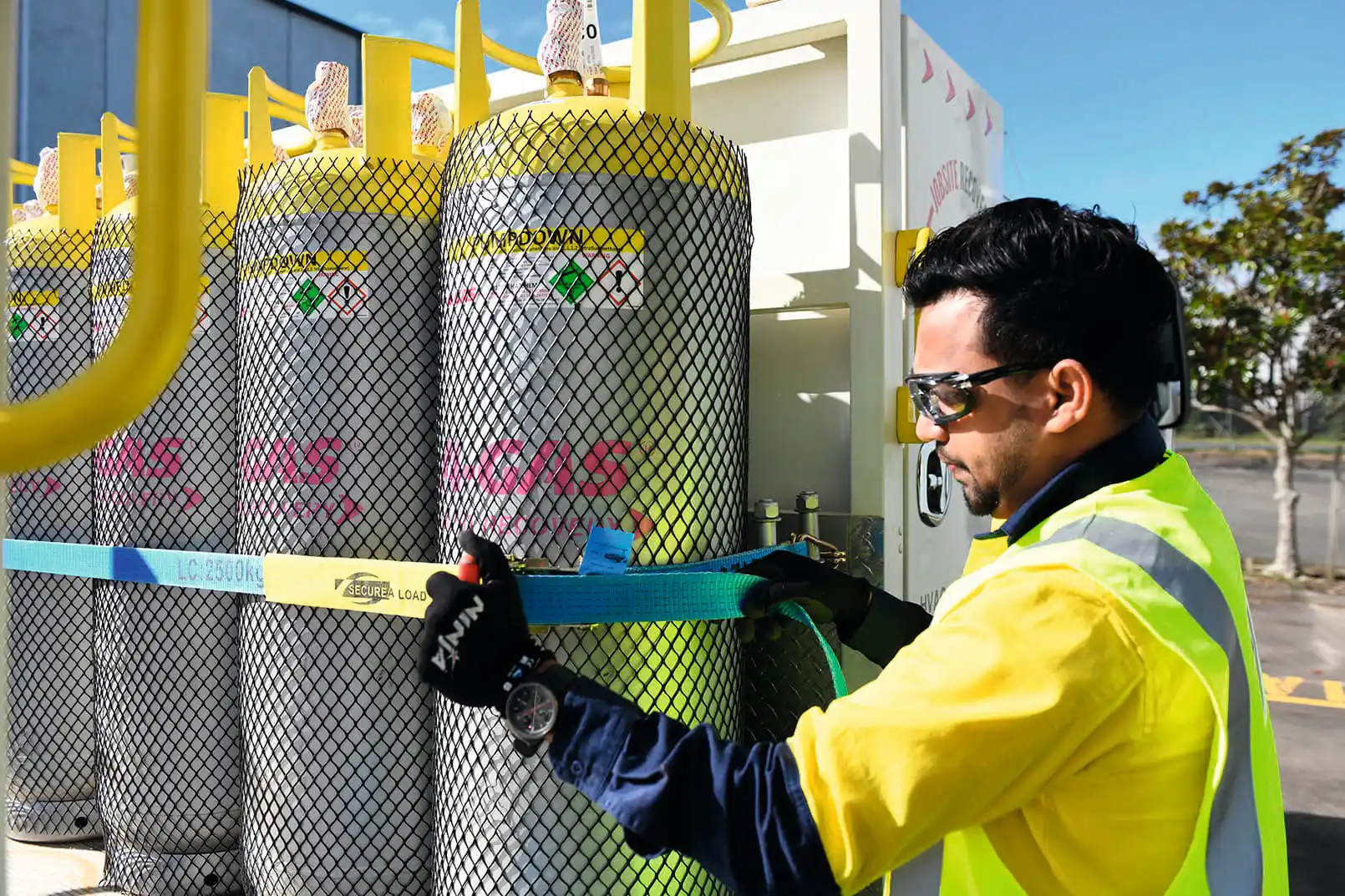
Lifecycle Refrigerant Management is built on a simple but powerful principle: recover, reclaim and reintroduce existing refrigerants into the market, preventing them from being released into the atmosphere or prematurely destroyed. By investing in innovative equipment and services such as Rapid Recovery, Rapid Exchange and Refri-Claim, A-Gas provides practical and tailored approaches.
“Recovered gas is often out of specification due to its use or the way it has been previously managed. Depending on the nature and level of contamination, we have invested heavily in deploying various reclamation technologies. This gives us plenty of capacity to clean and reclaim the used gas to AHRI 700 standards, which is equivalent to virgin-grade product specifications. Once refrigerant has been reclaimed and meets AHRI specifications, there is no differentiation between reclaimed and virgin products,” explains Elvira.
When reclamation is not possible, refrigerants are safely destroyed using UN-approved and TEAP-certified technologies, permanently removing the potential for future emissions. “By leveraging off compliance programmes and voluntary carbon market methodologies, we have been able to create tradeable carbon credits from the destruction of eligible material, whose value can lead to further investments in LRM efforts” says Elvira.
Ongoing challenges: Existing refrigerant banks and difference between recycling or reclamation
Despite these advances, several challenges remain. One of the main risks concerns existing refrigerant banks - the quantities of substances contained in equipment and products that have not yet been released or recovered.
“This represents a significant and hidden climate challenge that has historically not been addressed and from which an important opportunity for circularity worldwide can arise”, continues Elvira Nigido. “Working with governments and local industry stakeholders to raise awareness about the risks posed by existing banks of refrigerants and their potential impact if left unmanaged is a critical starting point”.
Another challenge the distinction between recycling and reclamation. Recycling involves a basic cleaning process which allows the refrigerant to be recovered with the limit of being re-used within the same system from which it was recovered.
Reclamation, is a more advanced industrial process that restores the refrigerant to purity levels equivalent to those of virgin product, meeting AHRI 700 standards; and allows reclaimed refrigerant to be reintroduced onto the market without technical limitations.
A sustainable future
The scale of the opportunity to build a sustainable future is huge: “There is still much scope and potential and there is no shortage of collective work remaining to be done”, Nigido concludes. “Through our LRM offerings and stakeholder partnerships, we will continue to invest in and expand recovery channels across regions. By maximising the useful life of refrigerants and limiting the opportunity of release into the atmosphere, we can reduce the risk of serious environmental harm”.