09 April 2026
|
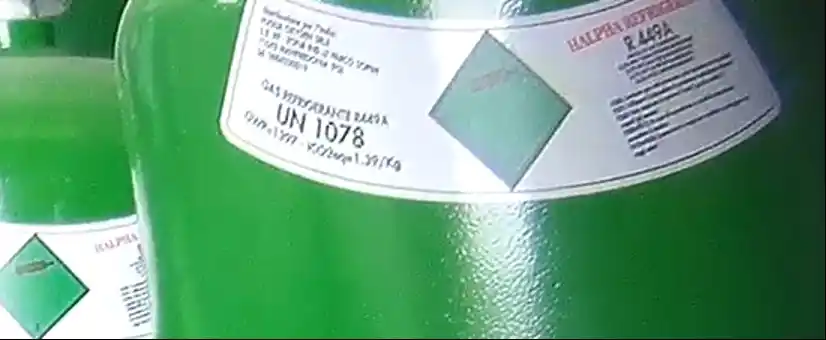
Illegal climate-damaging refrigerant gases worth hundreds of millions of euros a year in lost profits to legitimate suppliers are entering Italy via organised criminal networks, penetrating major supply chains including manufacturing, supermarkets and the state railway.
In the new report Fakes, Fraud and F-gases, the London-based Environmental Investigation Agency (EIA) reveals the findings of its latest investigations into the illegal trade in super-pollutant hydrofluorocarbons (HFCs), which poses significant threats to both the EU’s climate targets and to corporate supply chains.
HFCs are a type of fluorinated gas – F-gases for short – which are widely used in refrigeration and air-conditioning. They are potent greenhouse gases (GHG) being phased down around the world under the Montreal Protocol’s Kigali Amendment, while the European Union is pursuing an even more ambitious reduction pathway through its F-Gas Regulation.
Following deep cuts in Europe’s HFC supply, a large scale international illegal trade in F-gases has sprung up, driven by huge profits and uneven law enforcement, which has attracted organised criminal networks.
EIA Senior Climate Campaigner Fin Walravens said: “Estimating the scale of illegal trade in any product is difficult, but industry associations have claimed nearly half of the refrigerant gas on the Italian market is illegal.”
The EU introduced new regulations in 2024 to combat the illicit trade, including new cylinder take-back requirements and strengthened customs checks.
But a covert investigation by EIA has revealed that multiple companies operating at different points in the supply chain, from importers to regional distributors, openly admit to practices such as exceeding quota limits, falsifying invoices, mislabelling virgin refrigerants as being reclaimed gases and evading Value Added Tax (VAT).
The report also reveals a growing trend of fake F-gases flooding markets, with cheap highly polluting F-gases mislabeled and sold as lower climate impact F-gases.
Some of these companies claimed to supply major brands, including the Italian state railway Ferrovie dello Stato, Carrefour, Lidl Italy and global manufacturers Iveco and Frigo Systems, raising concerns that illegal refrigerants are entering mainstream commercial supply chains.
“Companies have known for a long time that rapid reductions in HFCs are coming, and yet many retailers and other sectors across Europe remain heavily reliant on these climate-wrecking refrigerants, despite the ready availability of alternatives. Ultimately this demand is driving illegal trade,” said Walravens.
“High consumer demand drives up European prices, spurring organised criminals to exploit the price differentials with HFCs bought outside the EU and smuggled either directly to Italy or via countries with weaker border enforcement, such as Bulgaria and Romania.”
Italy is the EU’s largest consumer of air-conditioning and in 2024 reported more HFC seizures than any other member state. In 2025, EIA conducted undercover investigations into the country’s HFC market, engaging across the supply chain with importers, distributors and online sellers trading on online marker places.
EIA’s undercover investigators identified Halpha Refrigerant, an Albanian importer and distributor, which claimed to supply half of southern Italy’s HFCs, worth €15 million over five years. However, the company holds no F-gas quota and the unusually low prices it offered strongly suggested the gases were illegally sourced.
In northern Italy, a Carma Metals representative told EIA’s investigators the company exceeded its quota and sourced HFCs from outside the EU, often importing via Romania and Bulgaria. The representative named equipment manufacturer, Frigo System and major retail chains Lidl Italy and Carrefour within its supply chain.
In a right to reply, Carrefour told EIA that Carma Metal was not a direct supplier and it had no direct relationship with the company, although it may be that the company supplies Carrefour indirectly, for example via a refrigeration servicing company. Lidl Italy did not respond to our request to comment.
A third company, regional distributor Puglia Oxygen, initially offered EIA investigators 200kg of virgin R404A over the phone, noting that a different HFC described as “other material” would be invoiced. R404A is a highly potent greenhouse gas commonly used in commercial and industrial refrigeration. Because of its climate impact, its use for servicing existing equipment has been severely restricted. The company also claimed to supply major clients, including Italy’s state railway and international truck and bus manufacturer Iveco.
However, in a later face-to-face meeting, a senior official denied the restricted gas was available. Instead, he pointed to the impact of illegal HFC traders from Bulgaria, claiming that millions of euros’ worth of HFCs were coming though Italian ports.
Iveco told EIA it held its suppliers to a Code of Conduct but did not respond when asked if Puglia Oxygen was one of them.
The Italian authorities have acknowledged the F-gas challenge, recently setting up a formal roundtable of the country’s environment ministry, customs and police to tackle the illegal trade.
Walravens added: “Despite increased enforcement efforts across Europe, EIA’s findings once again highlight the deeply interconnected nature of illegal HFC trade across member state borders.
“With a 50 per cent supply cut due in 2027, consumers across Europe must rapidly wean themselves off F-gases and onto natural refrigerant alternatives if they want to avoid organised crime in their supply chains.”
Fakes, Fraud and F-gases calls for:
- retailers, manufacturers and major HFC consumers to rapidly phase out HFCs in all equipment
- full and consistent implementation of the EU F-Gas Regulation, including through stronger agency cooperation and implementation of real-time quota tracking at customs points
- more risk-based inspections and systematic testing of refrigerant cylinders
- improved cross-border enforcement cooperation, particularly in known hotspot member states
- integrating financial investigations into enforcement actions against illegal HFC trade
- deterrent penalties, including significant fines, confiscation of goods, criminal sanctions and quota removals for repeat offenders.