13 February 2026
|
 Professor Judith Evans was awarded the J&E Hall International Gold Medal
At its 126th Annual Dinner in London, the Institute of Refrigeration (IOR) once again celebrated exceptional individual achievements that have advanced the RACHP sector. It also recognised an organisation demonstrating strong commitment to sustainability through the IOR Beyond Refrigeration Environmental Award.
The J&E Hall International Gold Medal recognises the most noteworthy practical contribution to innovation in refrigeration, air conditioning and heat pump technology. This year’s winner is Professor Judith Evans of Refrigeration Developments and Testing and London South Bank University.
She received the medal for her exceptional contribution to energy and carbon reduction, by optimising refrigeration performance throughout the food cold chain. Her work has consistently combined academic excellence with practical application, addressing real-world challenges in energy use, carbon reduction, food safety, and food quality.
A major focus of her career has been the optimisation of refrigeration systems across food processing, cold storage, transport, retail, and consumer handling, in both developed and developing countries. Her work is shaping industry practice and public debate. Notably, research on raising frozen food storage temperatures to minus 15 degrees has attracted global attention and was presented at COP28 in Dubai.
Alongside research excellence, Professor Evans has provided sustained leadership and service to the refrigeration community. This includes contributing extensively to international and national standards, the development of guidance and road maps, and the delivery of collaborative projects.

Jake Locke, above, of the University of Warwick was awarded the Ted Perry Memorial Award for Student Research for his work on “Investigation of salt mixtures for resorption heat pump cycles”. His research is focused on low-carbon thermal technologies.
He has developed a novel sorption-based heating and cooling system using innovative salt mixtures and ammonia as a low-GWP refrigerant, offering a credible alternative to gas boilers. Judges commented that this project stands out for its technical depth, practical relevance, and integrated, systems-level approach. It has clear potential to support the decarbonisation of domestic heating as well as providing a foundation for future collaborative research.
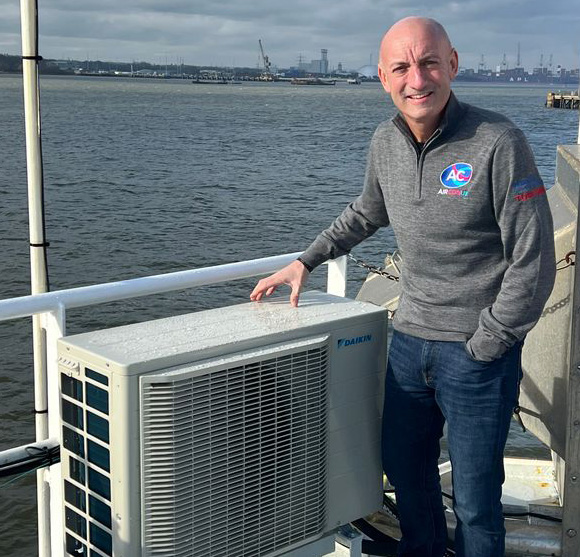
The IOR’s RACHP Engineering Technician Section makes a Lifetime Achievement Award to an individual who has spent their whole career in a hands-on role, having displayed exceptional dedication to their customers, employers, and their sector.
This year’s winner was Andy Clarke of Airconuk, above, who displayed exceptional commitment to improving industry practices through training, helping to standardise installation techniques, and staying updated with emerging technologies. His passion for the industry has driven him to continuously refine his skills and share his insights at industry workshops and local trade events, making a lasting impact on both his peers and the industry as a whole.
He was described as someone who embodies the values of dedication, professionalism, and hands-on expertise that are essential to this industry.
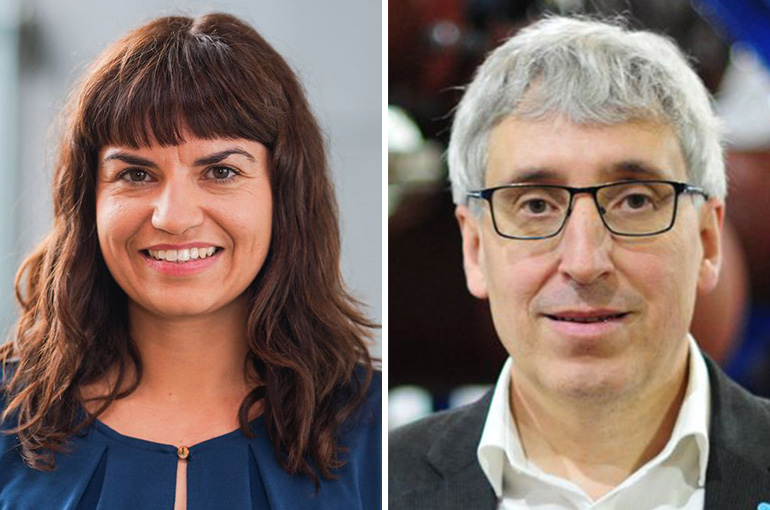
Catarina Marques and Dermot Cotter were joint winners of the Lightfoot Medal
This year’s Lightfoot Medal, awarded for the best IOR Talk and Paper of the previous year, was made jointly to Catarina Marques and Dermot Cotter for their paper “Energy Usage in the Industrial Refrigeration Sector: Food, Drink, Chemical and Pharmaceutical Refrigeration”. The winner of this award is decided by vote of IOR members and the paper and a recording of the presentation is available on the IOR website. The authors generously donated their prize of £500 to the IOR President’s Fund, requesting that it be used to support and advance training across the industry.
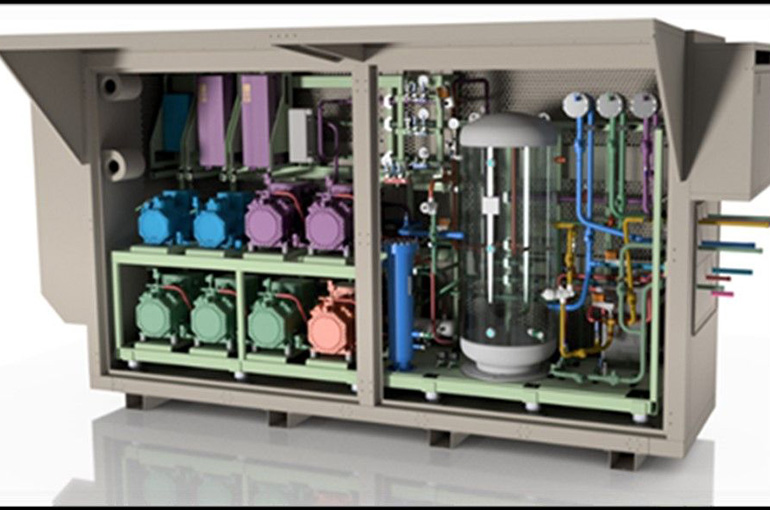
The IOR Beyond Refrigeration Environmental Award is made annually to a project demonstrating the achievements of our sector in reducing environmental emissions from cooling in the UK. This year it was awarded to Space Engineering for its Booster Integrated Solution Plus, pictured above.
This project involved the replacement of multiple HFC refrigeration plants and gas boilers with a far smaller, all-electric solution using CO2 refrigerant. It reduced materials use, site disruption, energy and emissions. Live monitored performance showed consistently high efficiencies achieved, strong seasonal performance, verified carbon savings of around 180 tonnes over its lifecycle, and a clear commercial return. It sets a new benchmark for low-carbon supermarket refrigeration and heating.
The judges were particularly impressed with the philosophy of continuous improvement of sound principles the project demonstrated, in particular the controls strategy. This project demonstrates the potential to remove fossil fuel heating systems from retail refrigeration applications.
Professor Evans, Jake Locke and Space Engineering provided more information about their work on the next IOR papers programme, allowing members to find out more about their groundbreaking work.
For more information about the awards awards and how to enter next year, visit https://bit.ly/IORAwards