21 January 2026
|
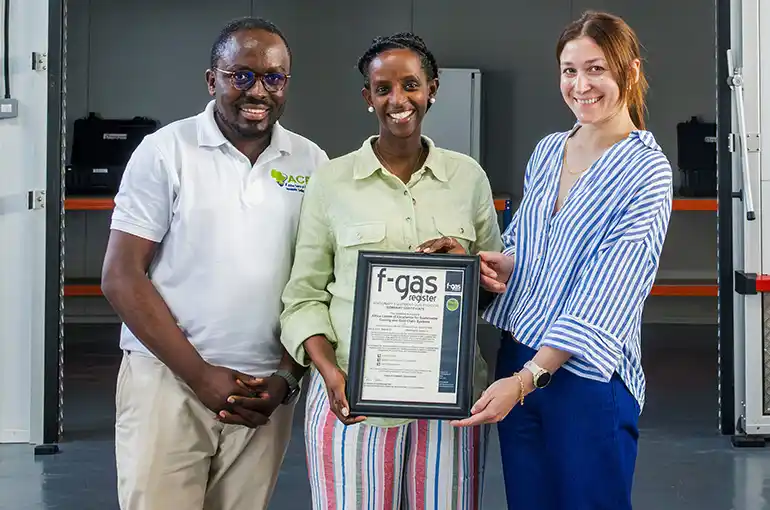
The Africa Centre of Excellence for Sustainable Cooling and Cold Chain Systems (ACES) in Rwanda has been added to the UK’s F-Gas Register.
ACES is said to have demonstrated that it has appropriately qualified engineers and, although it is in Africa and does not have to abide by the regulations that UK businesses do, it has a need to purchase equipment and supplies which require registration.
Launched with support from Defra and the government of Rwanda, the ACES training centre works with the United Nations Environment Programme (UNEP) and UK academics, led by the University of Birmingham, to establish sustainable and resilient cooling and cold chain systems.
F-Gas Register Director of Schemes Graeme Fox said: “As the only certifying body with in-house expertise in the regulations and the specific RACHP sector, we are perfectly positioned to assist ACES in securing recognition of the work they are doing in Kigali and beyond.
“I have experience of working with UNEP in developing international training standards and appreciate the huge effort that has gone into developing this training centre in Rwanda. We wish the centre the very best for their future delivering up-skilling and certification for technicians and engineers in the RACHP sector in Kigali and other centres across the developing world.”
The engineers listed for the centre’s registration have all been verified to have UK-approved F-Gas qualifications in line with Defra requirements and the centre will be subject to the same requirements as any other F-Gas Register member. Registration is a legal requirement for business entities operating in the stationary refrigeration, air conditioning and heat pump market employing F-Gas qualified operatives.
ACES Technical Director, Basile Seburikoko, said: “Receiving the Company F-Gas Certificate is a major step forward for ACES. It confirms that our systems, equipment and technical practices meet internationally recognised standards. This certification enables ACES to provide services to companies and institutions in Rwanda at an international level, while supporting the country’s transition to climate-friendly cooling technologies.”