16 January 2026
|
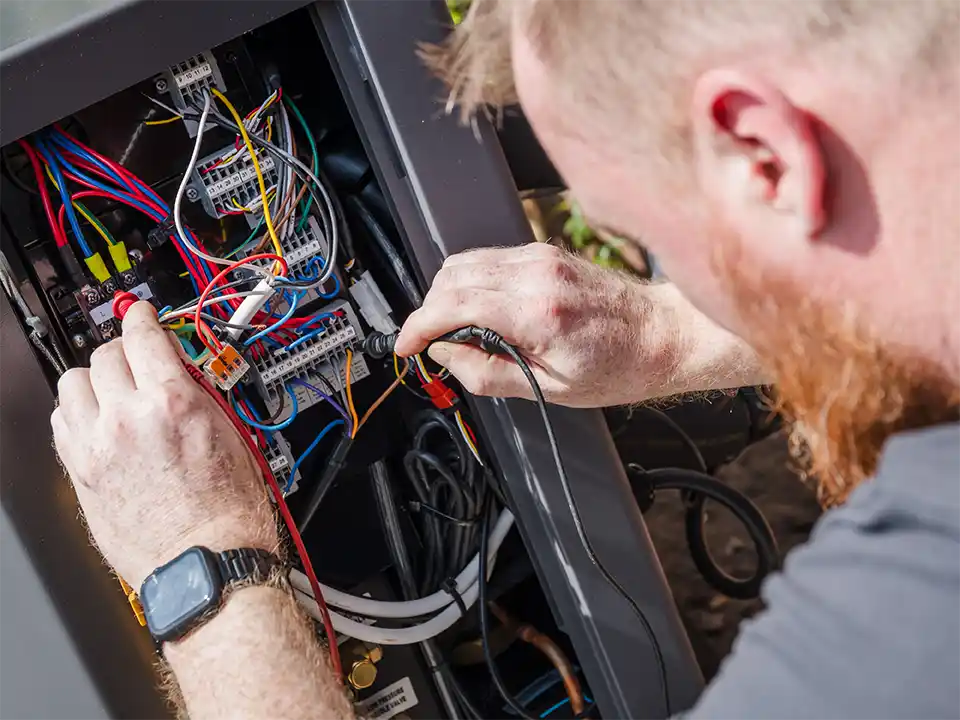
Greg Banham, Commercial Director at Navien UK, explores why more homes are ready for heat pumps than many assume, and how Navien UK is helping installers lead the transition.
For years, a common assumption has persisted: that much of the UK’s ageing housing stock is unsuitable for air-source heat pumps (ASHPs). Concerns about poor insulation, ageing radiators, and colder winter temperatures have fuelled the belief that only new-build homes are genuinely heat pump-ready. However, this belief is increasingly outdated. Over the past two decades, insulation standards in UK homes have improved significantly, thanks to widespread adoption of loft, cavity wall, floor insulation & external wall insulation. In the UK we already use wet heating systems such as radiators or underfloor heating, which provide a strong foundation for efficient heat pump operation when systems are designed and commissioned correctly. With regulatory changes introduced in May 2025 that simplify ASHP installations and reduce previous barriers, UK homeowners now have a clearer, more achievable route toward low-carbon heating.
Debunking common heat pump myths
Modern heat pump technology has advanced significantly in recent years, addressing many of the concerns that once limited adoption. Newer units, including Navien’s PEM750, are capable of reaching flow temperatures of up to 75°C. However, it is important to clarify how these temperatures are intended to be used. High-temperature modes exist for specific functions – such as hot water disinfection – not for continuous space heating. Running any heat pump at this level for routine heating would significantly reduce efficiency, particularly in the UK, where electricity is currently more expensive than gas.
For optimal performance, ASHPs are designed to operate at lower flow temperatures – typically between 35-55°C. When paired with appropriate system design and good home insulation, these lower temperatures provide consistent, reliable heating while keeping running costs manageable.
That said, not every property can easily be upgraded. In homes where improving insulation or updating radiators is difficult, a high-temperature heat pump can still provide a practical alternative, offering flexibility while supporting a transition away from fossil fuels.
Beyond flow temperatures, homeowners often underestimate how much modern insulation standards and recent retrofitting activity improve heat pump performance. Many UK homes built or upgraded in the last few decades already offer suitable heat loss characteristics for efficient ASHP operation. Others require only modest adjustments, such as larger radiators or improved pipework, rather than whole-home overhauls.
It is also important to note that system compatibility varies. Many homes with combi boilers or older copper cylinders will require system adaptations before installing a unit, as it is not compatible with standard combi boiler configurations or traditional copper cylinders without modifications. Understanding these nuances ensures installers can specify the right system for the right home – avoiding poor performance, unnecessary costs, or unrealistic customer expectations.
Together, these factors demonstrate that a far greater proportion of UK homes are ASHP-ready than commonly assumed.
Replacing a traditional boiler with a heat pump can significantly reduce carbon emissions and lower energy bills – when systems are correctly installed, operated and matched to property needs. Independent case studies and analyses, including research from consumer research by Which?, show that households can
achieve meaningful and sustained reductions in running costs compared to gas boilers. For many, the combination of lower operational emissions, compliance with evolving legislation, and long-term financial savings makes heat pumps a practical choice for both homeowners and installers seeking to future-proof UK homes.
The heat pump market landscape
The UK heat pump market has been expanding rapidly in recent years. In 2024, over 98,468 hydronic heat pumps were sold, a 63% increase over the previous year. Government initiatives, such as the Boiler Upgrade Scheme and the easing of planning regulations for ASHP installations, have played a major role in accelerating market growth.
Public awareness has also risen. Research shows that 77% of UK adults are now familiar with heat pumps, and around 25% of homeowners have either installed an ASHP or are actively considering doing so. In the new-build sector, adoption continues to increase: heat pumps were used in 21% of new homes in early 2025, up from just 7% two years earlier.
Importantly, technical assessments suggest that nearly one-third of UK homes can already support low-temperature heat pumps without major fabric upgrades. Not only that, but around two-thirds of properties could accommodate high-temperature units with relatively minor system modifications. These figures underline just how “heat pump ready” the UK housing stock truly is - and how much potential exists for accelerating decarbonisation without waiting for full-scale home retrofits.
Training installers for the transition
A key barrier to wider heat pump adoption has been the availability of trained installers. Like others Navien UK is helping address this challenge through its hands-on training programmes that cover every stage of heat pump deployment - from specification and heat-loss calculations to installation, commissioning, system optimisation, and servicing.
These courses combine formal qualifications with practical experience, giving installers the confidence to apply heat pump technology effectively in a wide range of property types.
By equipping installers with the knowledge and skills to integrate heat pumps into a wide range of UK homes, Navien UK is helping to close the skills gap and accelerate the country’s transition to low-carbon heating. The training also ensures that installations are completed to a high standard, improving system performance and long-term reliability for homeowners. Alongside its heat pump offering, Navien continues to provide comprehensive boiler training, giving installers a complete understanding of both conventional and low-carbon heating systems.
To learn more about the training courses with Ultimate Renewables, visit: https://ultimaterenewables.com/training
Enabling a low-carbon heating future
Modern heat pumps - combined with improving home insulation standards, growing installer expertise, and supportive government policy - show that the UK is more prepared for widespread heat pump adoption than many believe. As the market continues to mature, the focus is shifting from questioning whether homes are heat pump-ready to understanding which system type best suits each property.
https://navien.co.uk