09 March 2026
|
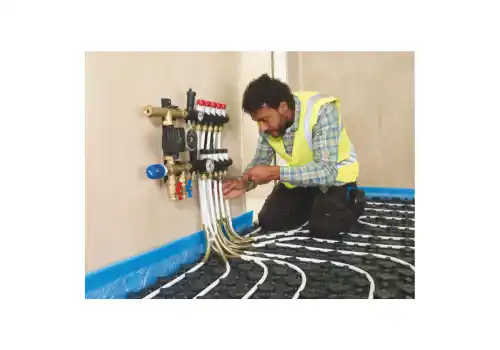
Tony Croke, Product Manager for Indoor Climate Solutions at Wavin, explains why underfloor heating (UFH) is a valuable addition to any installer’s toolkit - offering a reliable, future-ready solution that enhances system performance and supports regulatory compliance.
In the UK, the way we heat our homes and buildings is changing. With heating responsible for over a third1 of the nation’s carbon emissions, decarbonisation has become central to national net-zero targets and energy security strategies. Heat pumps are rapidly becoming the go-to low carbon heating option. Rising energy bills, government support, and growing demand from homeowners for cleaner, more efficient systems are all driving the shift away from traditional gas boilers.
Government targets are clear - heat pump installations are set to rise dramatically, with at least 600,000 expected each year by 2028. For installers, this isn’t just more work - it’s a chance to rethink what a “standard” home heating system looks like. Systems once seen as premium, like underfloor heating (UFH), are now a natural fit with heat pumps. This combination brings real benefits. Better system performance, more comfort for homeowners, and smarter solutions that add value to properties. It’s also an opportunity for installers to stand out, offering more tailored solutions, and increase returns.
A planet-friendlier investment
It’s no secret that the UK is rapidly moving toward a future that relies much less on carbon emissions to produce its energy, and the government’s impending Future Homes Standard reflects this shift. Expected to come into effect as early as this year, the legislation mandates that new builds must produce at least three quarters (75-80%) less carbon emissions than those built under current Building Regulations.
According to a study by the International Energy Agency2, heat pumps can cut carbon emissions by between 20% and 80% compared to traditional fossil fuel based heating. As the Future Homes Standard edges closer, installers are under increasing pressure to deliver low-carbon solutions - even though many of the final details remain unclear still. With the full regulatory picture still emerging, the immediate priority is clear: specifying systems that cut emissions wherever possible and aligning with the direction of future compliance.
This is where UFH comes in. Unlike traditional radiators, both UFH and heat pumps are designed to operate at lower temperatures; which makes them naturally compatible. This allows the heat pump to run within its optimal temperature range, without the need to work harder to deliver comfortable heat levels. The result is a more balanced, energy-efficient system that maintains comfort, keeping both energy use and carbon emissions low.
An investment in comfortable living and your wallet
Unlike traditional convection heating, UFH distributes warmth evenly across the entire floor, eliminating cold spots and creating a consistent, radiant heat that feels natural and inviting. The system also operates silently and out of site, freeing up interior space and offering greater flexibility for interior design.
These systems also operate at significantly lower temperatures – typically between 30-50°C for hydronic underfloor systems, like Wavin’s Comfia system3, as opposed to the 60-70°C required for conventional radiators, making it a natural fit for low-carbon heat sources like heat pumps.
This synergy results in a more balanced heating system that uses significantly less energy compared to traditional boiler system. When heat pumps are paired with UFH’s ability to evenly and consistently radiate heat, the home stays warm for longer, reducing the need for frequent thermostat adjustments. This creates a lower overall energy demand throughout the home, helping to cut heating costs in the short term while maintaining a high level of comfort for the homeowner.
But this heating combination isn’t just a smart financial choice in the short term. For homeowners looking to make long-term improvements, a heat pump and UFH setup offers lasting value.
An investment into the future
As a long-term investment, installing a heat pump and UFH system helps futureproof a home by aligning with upcoming government regulations, boosting sustainability credentials, and enhancing both adaptability and cost-efficiency. This added value can make the property more attractive to energy-conscious buyers or first-time buyers, increasing its market appeal when the homeowner decides to sell. In this way, the combination of heat pump and UFH not only delivers day-to-day savings but also potentially supports a stronger financial return in the future. To assist developers in meeting their future goals and government regulations, Wavin is also investing in installer expertise through its Wavin Installer Network (WIN)4. It’s a free to-join programme offers tailored training, hands-on support, and priority access to technical guidance for UFH, ventilation and heat recovery systems. WIN is designed to help installers enhance their skills, stay up to date with the latest technologies, and deliver high-quality installations with confidence, whilst remaining compliant to new and existing regulations.
For homeowners, the combination of UFH and a heat pump offers long-term comfort, energy efficiency, and peace of mind. For installers and the wider trade, it represents a future-ready solution that meets the growing demand for sustainable, low-carbon homes.
Source
1. https://tinyurl.com/55eh8bns
2. www.iea.org/reports/the-future-of-heat-pumps/ executive-summary