24 March 2026
|
Tim Williams, co-founder of Go Geothermal, explores the accelerating transition to renewable heating in the UK’s largest buildings and the innovative solutions now available to forward-thinking organisations.
The conversation around decarbonising Britain’s building stock has moved beyond residential properties. Whilst domestic heat pump installations continue to grow at a rapid pace, there’s real untapped potential in our public buildings, commercial estates, and leisure facilities. These large-scale properties, from large footprint financial headquarters to energy draining swimming pools, represent a big challenge and a significant opportunity in our journey towards net zero.
At Go Geothermal, distributing CTC heat pumps from Sweden has positioned us at the forefront of this transformation. As the exclusive UK distributor for CTC, backed by NIBE, we are witnessing a fundamental shift in how organisations approach their heating infrastructure.
The journey has admittedly been slower in the commercial sector than many anticipated, but the options available today are more varied and sophisticated than ever before.
The scale of the challenge
Consider the energy demands of a typical large commercial building. A regional office for a financial institution might need hundreds of kilowatts of heating capacity. A leisure centre with swimming pools operates nearly year-round at significant cost.
Supermarket chains with refrigeration needs generate substantial waste heat that traditionally leaks unused into the atmosphere. Global gyms like Virgin Health, local authority buildings, and educational campuses all share a common burden: enormous energy bills and the pressing need to demonstrate environmental responsibility.
Swimming pools deserve particular attention. Across the country, community pools are closing their doors, unable to sustain the rising energy costs required to maintain water temperatures and adequate air handling. These closures represent not merely an economic failure but a social one, removing vital community resources and health facilities. The sad fact is that renewable heating technology could dramatically reduce these operational costs, yet awareness and adoption still remains low.
Technology leading change
The encouraging news is that the technology has caught up with the ambition. We can now supply single units producing approximately 230kW of heating output. For larger installations, multiple units can be configured to meet virtually any demand, with sophisticated controls ensuring optimal efficiency across varying loads.
Beyond traditional ground source systems, water source heat pumps represent an exciting frontier. Our Thermogenius range shows this versatility, capable of extracting heat from rivers, lakes, and even industrial water sources. The physics are sophisticated: large bodies of water maintain relatively stable temperatures throughout the year, providing an abundant and reliable heat source that requires minimal ground disruption to access.
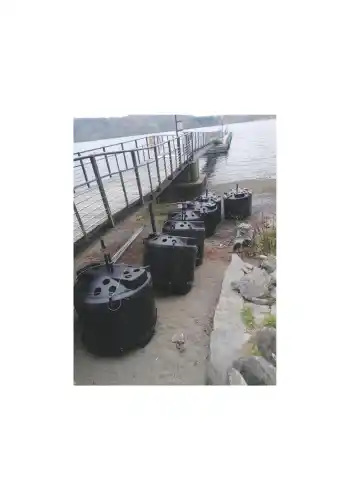
One of our most instructive projects demonstrates this potential brilliantly. At the Lake District Visitor Centre at Brockhole, a lake source heating system has been operational for over five years, drawing heat from Windermere through coils placed discreetly beneath the public transport jetty. This installation, funded through the European Structural Investment Fund’s Low Carbon Lake District initiative, saves approximately 50 tonnes of carbon annually whilst heating the historic Brockhole House. Whilst we did not supply the heat pump itself for this project, we provided all the external equipment, including the crucial Thermogenius technology that interfaces between the lake and the heating system.
The Windermere project offers valuable lessons for others considering similar installations. Bodies of water don’t need to be vast to be viable. The technology is proven, reliable, and requires remarkably little maintenance once properly commissioned. Moreover, the visual impact is minimal, an important consideration for heritage properties and environmentally sensitive locations.
Thermal storage potential
Perhaps the most exciting development in large-scale renewable heating involves thermal storage, a concept that remains underutilised despite its huge potential. Picture a modern school building with extensive glazing. On sunny days, solar gain through those windows generates significant heat, often requiring ventilation or cooling even in winter months. Traditional building services simply exhaust this warmth to the atmosphere. What if instead we could capture it?
By coupling heat pumps with borehole thermal storage, we can harvest excess heat during periods of solar gain or high occupancy, storing it in the ground to be recovered during colder periods. The ground becomes a seasonal battery, charged during summer and autumn, discharged through winter. This approach not only improves system efficiency but also reduces the peak capacity required from the heat pump itself, lowering costs.
The experts we work with increasingly design systems that dovetail multiple heat sources and storage strategies. A leisure centre might combine waste heat recovery from refrigeration plant, solar thermal collectors, and ground source heat pumps with cross-seasonal storage. The result is a highly resilient system that minimises reliance on any single heat source whilst maximising overall efficiency.
Research and design
Experience matters profoundly at the specification stage. We draw on extensive in-house research and development capabilities, with manufacturing exclusively within Europe. This is not simply about supply chain security, it means we design and refine these systems, adapting solutions to the specific quirks of UK building stock and usage patterns.
We have built relationships across the commercial and public sectors that go beyond simple equipment supply. We understand the procurement challenges facing local authorities. We recognise the budget constraints in the leisure sector. We know that financial institutions require cast-iron reliability and comprehensive maintenance support. Our role is to match the technical capabilities of world-leading heat pump technology with the practical realities of British buildings and organisations.
The business case strengthens
The economics of large-scale heat pumps have transformed dramatically. Capital costs, whilst still substantial, have decreased as manufacturing scales up. More importantly, the revenue support mechanisms and grant funding available continue to evolve, particularly for public sector and community projects. The Low Carbon Lake District initiative demonstrates how European and domestic funding streams can be layered to make projects viable. Operating costs tell an even more compelling story. Ground source and water source heat pumps typically deliver between three and four units of heat for every unit of electricity consumed. As electricity grids decarbonise and gas prices remain volatile, this efficiency advantage translates into significant operational savings. For an energy-intensive facility like a swimming pool, the payback period for a properly designed renewable heating system can be surprisingly short.
Looking ahead
The transition to renewable heating in large buildings is no longer a question of if but when and how. The organisations leading this change, from progressive local authorities to forward-thinking leisure operators, are not merely reducing their carbon footprints. They are future-proofing their operations, insulating themselves from fossil fuel price volatility, and demonstrating the environmental leadership that stakeholders increasingly expect.
The variety of options now available means that virtually any large building can find a renewable heating solution suited to its specific circumstances. Whether ground source, water source, or hybrid systems incorporating thermal storage, the technology exists today to dramatically reduce both carbon emissions and energy costs.
At Go Geothermal, we remain committed to bringing the best of European heat pump innovation to the UK market. The revolution in renewable heating has begun. The question for commercial and public sector decision-makers is whether they will lead it or follow behind.