24 November 2025
|
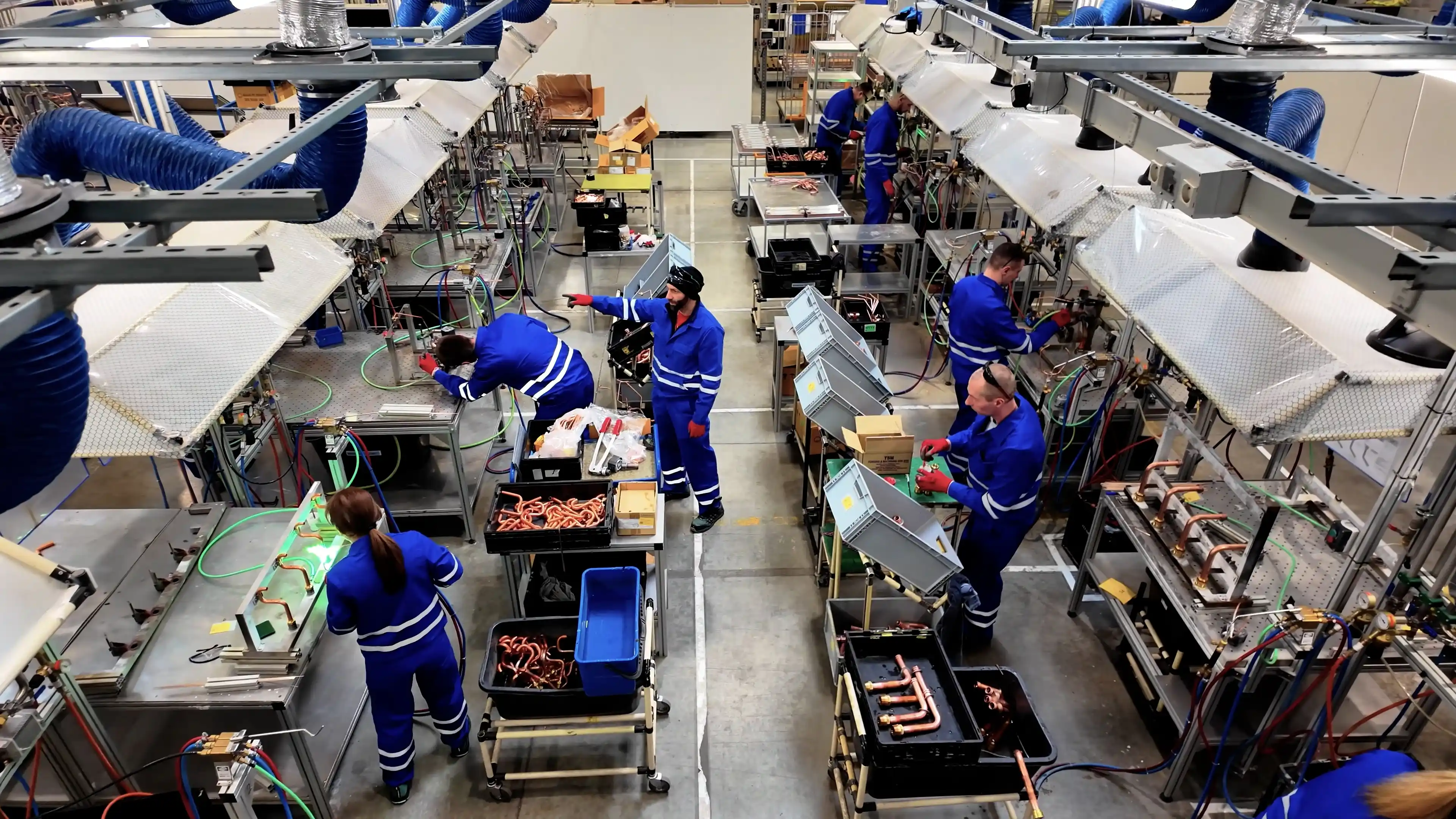
Heat Pumps Today visits the fully upgraded and expanded Panasonic factory in Pilsen, Czech Republic.
Panasonic has invested EUR 320 million into the expansion and refurbishment of the facility in Pilsen, increasing the factory’s production capacity by 250% to a total of 140,000 m².
This large expansion project transfers production and R&D from South-East Asia to Europe as Panasonic increases capacity of heat pumps being produced locally and will be capable of producing up to 1.4 million indoor and outdoor heat pump units per year from 2030 onwards, for supply throughout Europe.
Aligning with the Panasonic GREEN IMPACT long-term environmental vision, this also ensures a reduction in carbon footprint through local production for local customers and their specific local requirements and their move towards non- fossil heating & cooling technology. As a‚ Net Zero factory, the facility is run using a combination of green energy purchases and its own 1 MW photovoltaic power production on the roof of the factory.
Heat pump production and R&D in Europe, for Europe
A shift from fossil-based energy towards electrification and renewable energy is rapidly taking place in Europe. Panasonic is committed to supporting Europe’s climate goals, and as part of these efforts, is working to meet growing demand across the region for renewable energy solutions. In 2024, the European heat pump market size was estimated at EUR 12.2 billion, and is expected to reach over EUR 71 billion by 2034 (Global Market Insights).
"At Panasonic, we see Europe as particularly advanced when it comes to sustainability, and therefore the acceptance of sustainable energy solutions. We’re seeing a marked uptick in interest in heat pumps in the European market, and we are anticipating this to be reflected in demand in the next few years. Our investment into the Pilsen factory demonstrates both our confidence in the growth of the market and our ability to anticipate and meet future demand," said Toshikatsu Fukunaga, CEO, Panasonic HVAC Europe. The new production complex will be capable of producing up to 1.4 million external and internal heat pump units per year from 2030 onwards for residential and commercial applications, for supply throughout Europe, making the Pilsen factory one of the largest producers of heat pumps in Europe by capacity. In 2024-25, the facility has more than doubled its production output, and momentum is increasing.
In addition, in cooperation with a local university, a state-of-the-art R&D center focused on future heat pump developments has also been established in Pilsen at the factory. As a key partner in the establishment of the R&D facility, the Technical University of Ostrava has completely designed and is due to build one of the research laboratories. By 2028, the Pilsen R&D team will manage the full heat pump development lifecycle, in coordination with the product planning division in Japan – ensuring the complete development of air-to-water heat pumps in Pilsen, from scratch to the final product.
Additional investments
The Pilsen facility is also investing significantly in robotics, automation and AI technology, as well as synergising with other global Panasonic factories in these areas. This will enable it to reach peak production capacity, drive efficiency and support the workforce. The factory currently has 80 robots deployed on site, and the factory layout has been optimised for the future deployment of automated guided vehicles (AGVs) and autonomous mobile robots (AMRs) for material supply and f inished product transport. In future, the facility plans to achieve 100% automation in component manufacturing.
Paul Kenny, Director General of the European Heat Pump Association, comments: "The heat pump sector is boosting Europe’s energy security, our economy and our path to decarbonisation by replacing fossil fuel imports with a clean, locally made and locally powered solution. Today's factory reopening is both a big step forward on that journey and a clear message to decision-makers from one of the world’s leading companies, that the future is bright in European manufacturing and that heat pumps will inevitably be at the heart of our future global energy system."
Commitment to sustainability
As part of its GREEN IMPACT commitment, Panasonic has set itself the target to achieve Net Zero across its own business operations globally as a Group in 2030, and across the entire value chain in 2050. Following the Panasonic concept, a Net Zero factory is achieved through the reduction of energy consumption, the generation of renewable energy onsite, and the procurement of energy from renewable sources. Currently, Panasonic has 46 Net Zero Factories globally, including Pilsen.
Pilsen is Panasonic’s second Net Zero factory in Europe, following the opening of the facility in Cardiff, UK, in 2024. As a Net Zero factory, the Pilsen facility will make a significant contribution to the ongoing reduction of Panasonic's CO2 emissions in its own business operations (known as Scope 1 and 2 emissions), such as energy consumption at our facilities including electricity, heating and lighting. The factory is powered by a 1 MW photovoltaic roof system in addition to the purchase of green electricity and heating energy.
The facility’s smart building management (BMS) system intelligently controls ventilation, heating and lighting (including sensor LED lighting throughout the facility), and ensures waste is minimised. Meanwhile, the facility reuses waste heat from ventilators and compressors to heat the building and help reduce energy consumption, and water waste is minimised via a retention reservoir on the roof of the facility, which catches and reuses rain water – avoiding city drainage systems.
In addition, starting in 2026, the facility’s vehicle fleet will move to Electric Vehicles (EVs) to further reduce carbon footprint.
Supporting the local economy
The local Pilsen region will benefit from the addition of high-value-added employment opportunities that utilise local talent, helping to prevent “brain drain” in the area. Panasonic’s long-standing cooperation with academia – in particular, the University of West Bohemia – is helping to promote science and engineering education in the area, as well as providing practical training for students. Enrique Vilamitjana, Managing Director of Panasonic Heating & Cooling Solutions Europe, says: “As a company with a strong European presence, Panasonic is committed to advancing clean heating and cooling solutions and supporting policies that enable the widespread adoption of heat pumps. A stable regulatory environment and ambitious climate targets are essential for accelerating the green energy transition and ensuring robust business cases for clean technologies. This is vital not only for the planet, but also to ensure robust business cases for clean technologies.”
Celebrating excellence in HVAC: Panasonic announces PRO Awards Winners
After the factory tour, Panasonic held their bi-annual award scheme, now in its 10th year, which recognised outstanding HVAC+R projects across Europe that incorporate Panasonic technologies and demonstrate a strong commitment to sustainability and forward-thinking design.
"We are incredibly proud to celebrate the outstanding projects that have emerged through this year’s PRO Awards," said Enrique.
He said: "These projects not only demonstrate the high standards of quality and innovation associated with Panasonic products but also highlight our commitment to sustainability and excellence in the HVAC industry.”
The PRO Award Winners are:
- Best Residential Single House Project: Hungary with Júlia
- Best Residential Multi Family House Project: Poland with Radomskie housing estate
- Best Commercial Project: Poland with Orbit One
- Best Hospitality Project: Germany with Best Western
Special Recognition Award Winners are:
- Best Innovative Project: Spain with TORRES IKON
- Best Green ImpACT Project: France with Puellemontier Central Kitchen
- Best Natural Refrigeration Project in Heating: Germany with POFIN
- Best Natural Refrigeration Project in Cold Chain: UK with GKN Aerospace with installers Green Cooling
- Best Indoor Air Quality Project: Germany with Sternodrom.