27 January 2026
|
Four projects across England are receiving a share of £47 million from the Green Heat Network Fund (GHNF), supporting the delivery of low-carbon heat networks across Greater Manchester, London and Sunderland.
Following last week's confirmation in the Warm Homes Plan of an additional £195 million per year of funding for the Green Heat Network Fund, through to 2029/30, we are excited to be announcing four more low-carbon heat network projects that have already benefitted from an award.
This announcement marks the continuation in a long-term programme supporting governments ambition to double the size of England’s heat network sector over the next decade. The variety of innovative clean heat projects receiving funding today showcases the central role of the GHNF in turning that ambition into delivery.
Through this package of awards, four projects across Manchester, London and Sunderland are receiving a share of £47 million from the GHNF. The investment will support heat networks using a variety of low-carbon sources, including harnessing heat from the River Thames, Manchester Ship Canal, sewage treatment works, and local data centres.
Ken Hunnisett, Programme Director for the Green Heat Network Fund, said:
“The Warm Homes Plan was unequivocal in its support for low-carbon heat networks, backing the GHNF with more funding and signalling plans to double heat network coverage in England over the next decade.
“In announcing the news of these high impact projects we’re underscoring the rationale for that additional investment and kicking off 2026 in real style.”
The heat networks that have been awarded funding through the GHNF are:
Waterloo and South Bank heat network (£15.6 million commercialisation and construction funding)
Hemiko has been awarded GHNF funding for a pioneering new heat network in London. The Waterloo and South Bank heat network will provide 56 GWh of heat to 12 buildings across one of London’s busiest districts in its first phase.
Iconic landmarks including the National Theatre, Southbank Centre, the BFI Southbank and Kings College London are exploring a low-carbon connection from a network powered by heat from the River Thames through a set of water source heat pumps.
The project will generate almost 200 local jobs, and provide a number of apprenticeship opportunities, scholarships, and provide trainee opportunities to increase the number of skilled workers in the district heating sector.
Toby Heysham, CEO, Hemiko said: “The Waterloo and South Bank Heat Network will unlock a cheaper, low-carbon future for buildings in the area. This heat network is being developed in a cultural and business hub that will significantly benefit being given access to locally wasted heat. The network will do the hard work and allow buildings to both take and give energy into the area.
“We are offering both heat and cooling using the amazing local resources and huge heat density in the area. We are already very active in South London, with the Clapham, Tooting and Greenwich networks a huge part of the Hemiko story. We are thrilled to be adding a terrific new scheme to the portfolio."
Media City heat network (£5.3 million commercialisation and construction funding)
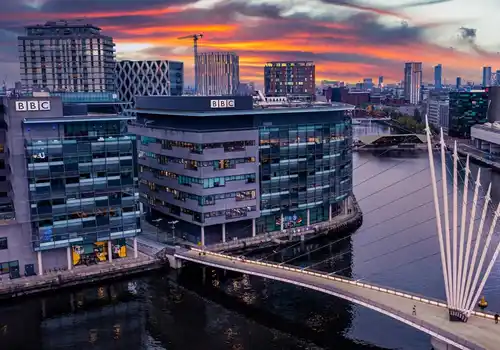
Leep Utilities (Leep) has been awarded £5.3 million from the GHNF to support the commercialisation and construction of an expansion and decarbonisation of the existing MediaCity heat network.
GHNF funding will enable Leep to progress the commercialisation phase of the project. Subject to successful completion of this phase, the project would then move into construction.
The funding will go towards the installation of water source heat pumps, harnessing excess heat from the Manchester Ship Canal to supply the new low-temperature heat network serving new buildings in MediaCity across the heat network’s expansion.
In later phases, the new low-carbon heat network will be combined with the existing network, decarbonising the heating provision for buildings connected to the current system. This phased approach allows new developments to access low-carbon heat in the near term while providing a controlled, cost-effective transition pathway for existing buildings.
In developing the project, Leep will aim to stimulate the local supply chain and invest in the development of additional skills, including apprenticeships and scholarships. Leep will collaborate with other local heat projects and stakeholders to maximise the benefits through aggregation.
If successfully delivered, the expanded network could provide a scalable platform for future growth, supporting wider heat decarbonisation objectives across Salford and Greater Manchester.
Ieman Barmaki, Director of Heat, Leep Utilities, said: “The award of Green Heat Network Fund support allows us to take the next step in developing proposals to decarbonise and expand the MediaCity heat network. The funding will enable us to work through the commercialisation phase, demonstrate viability and secure the necessary consents, before moving forward to construction. Using renewable heat from the Manchester Ship Canal has the potential to provide a practical, scalable pathway to lower-carbon heat for both new and existing customers.”
Sunderland Central heat network (£15.5 million commercialisation and construction funding)
1Energy and Sunderland City Council have signed an agreement to deliver a new city-scale district heating project for Sunderland.
Over £15 million of GHNF funding has been awarded to help kickstart the project that will significantly improve and future-proof the area’s heating infrastructure, supporting new commercial developments, civic buildings, and ongoing regeneration projects.
The network is expected to provide 39GWh of heat to a variety of buildings across the city through the construction of a data centre and energy centre in Deptford, which will supply recycled heat for use across the network. In parallel, the Council and 1Energy will continue to work with the Mining Remediation Authority to explore the potential of sourcing additional heat from a local mine water source.
Discussions are also ongoing around the possibility of providing heat to the local NHS Foundation Trust’s new Eye Hospital, the University of Sunderland’s campuses, and the City Council’s City Hall.
The project, which will unlock a £67 million investment opportunity for Sunderland, will roll out in phases over the next five years, with a number of existing and new build residential developments to connect to the network in the coming years. The district heating project will also provide significant social benefits for the local area, as the scheme invests in almost 300 local jobs, a number of apprentices, and more opportunities across the country.
Jeremy Bungey, CEO of 1Energy, said: “We are proud to be partnering with Sunderland City Council to deliver a truly transformative heat network for the city. This project is an excellent example of the public and private sectors working together to deliver benefits to businesses, public institutions, and residents.
“Our ambition is to invest over £100 million in Sunderland, creating local jobs, stimulating further investment, and demonstrating how sustainable infrastructure can future-proof cities for generations to come.”
Hounslow heat network (£10.5 million commercialisation and construction funding)
Isleworth and Brentford are set for a major upgrade as the GHNF supports a project set to provide low-carbon heat to thousands of residents, schools, and private and public sector buildings.
The London Borough of Hounslow has received funding for a heat network that will extract waste heat from the Mogden Sewage Treatment works. It is expected that construction on the heat network will begin in 2028, for a heat network that will provide around 50GWh of heat per year to 30 buildings in the local area.
The network is expected to connect to a local NHS Trust, libraries, commercial buildings, and other vital local amenities across the borough. The £55m scheme delivered with majority private capital supported by this grant funding will mobilise the regional supply chain to deliver cost effective decarbonised heat and will create significant skills and employment opportunities.
Councillor Shantanu Rajawat, Leader of Hounslow Council, said: “I’m delighted to learn that we’ve been awarded over £10.55 m from the Green Heat Network Fund and I’d like to thank the team here at the Council for their hard work on putting together a very detailed and successful bid.
“This investment will lower the pressure on the grid and bring valuable new skills and jobs for local people in the long-term, boosting Hounslow’s economy while making energy more reliable for residents and businesses.”