11 December 2025
|
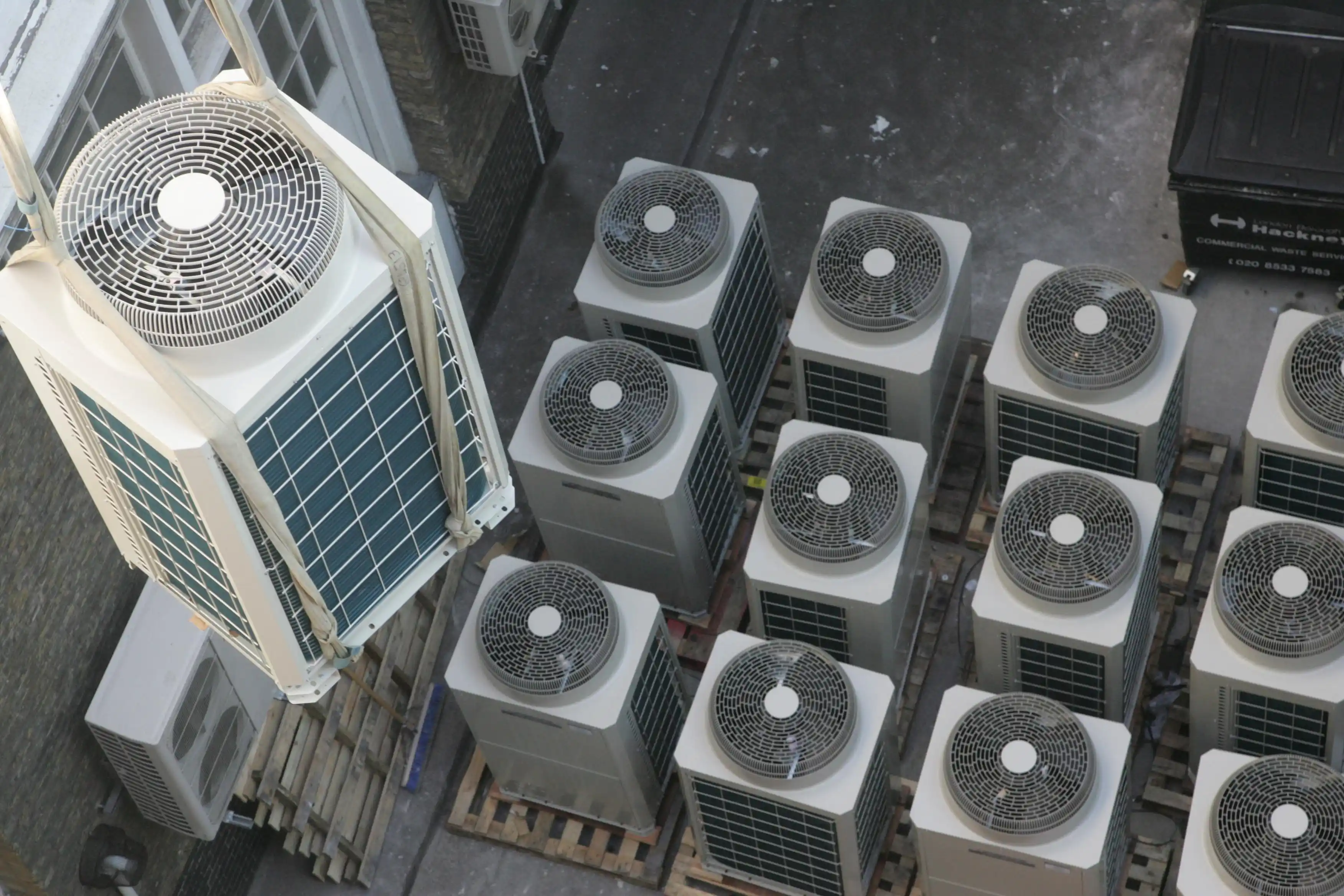
Chris Newman, Zero Carbon Design Manager, Mitsubishi Electric, discusses why UK commercial buildings need to upgrade HVAC systems and adopt heat pumps to cut emissions, but clearer standards, lower running costs and stronger policy support are required to speed up progress.
Decarbonising buildings is one of the biggest challenges that the UK faces as it becomes greener. To make meaningful progress in lowering emissions, we need coordinated action across government, industry and businesses - with each playing a vital role in changing how we heat, power and manage the built environment.
Combatting climate change remains critical for our planet, and innovative technologies, supportive policy frameworks and widespread behavioural change will be central to this mission. This article explores how these forces must come together to transform buildings into energy-efficient, low-carbon assets that support a greener and more sustainable future.
Why do we need to make our buildings more sustainable?
UK buildings account for a massive amount of the country’s total carbon emissions. In fact, commercial properties account for 42% of the country’s total carbon output1, and many offices, schools, retail, healthcare and other commercial spaces still rely heavily on gas. There are over two million non-domestic buildings in the UK2, so finding ways to help these buildings consume less energy will be a significant step towards reducing the UK’s overall carbon footprint.
And while there is this huge opportunity, there is also a significant risk to buildings that don’t decarbonise, due to increasingly stringent policies. For example, our report found2 that UK retailers could soon be losing £146m per year if they fail to adapt buildings to be lower-carbon, as they will become ‘stranded assets’, that are unlettable due to a poor environmental performance.
So, it’s vital for both the environment and for commercial building owners that we find ways to make our built environment greener.
First step for commercial building owners is taking stock of HVAC systems
The first step when it comes to finding ways to decarbonise is to take stock of the current systems that operate in the building – for ventilation, heating and cooling. Once there is an in-depth understanding of what equipment is in place across an estate and how this equipment operates, it becomes possible to identify the ‘easy wins’ that can be implemented first – such as finding areas where HVAC equipment could be used less often in areas of low demand – as well as the longer-term changes that can overhaul a building’s performance. Facilities managers are critical to this process, as they know the setup of their buildings better than anyone. In the retail industry, for example, we know that FMs recognise sustainability as a crucial driver of operational and financial improvement. HVAC systems account for up to 60% of a retail building’s total energy consumption2, with systems run almost non-stop due to a high footfall, long operating hours and the need to maintain customer comfort. In this industry, facilities managers taking stock of how these vital systems are running is a critical first step to finding ways to reduce energy use.
The role and benefits of heat pumps in commercial settings
One effective and readily available technology to support decarbonisation is heat pumps. Around 35,000 heat generating products are sold for commercial buildings annually - offering significant growth opportunities for heat pumps as an alternative heating method.
With the government and the Committee on Climate Change acknowledging that heat pumps will be a key technology to help the UK reduce carbon emissions, it is vital that heat pumps are considered as an alternative to gas when commercial buildings look to retrofit HVAC systems. In fact, one commercial heat pump installation is equivalent to eight residential installations – meaning it can make a significant contribution to driving heat pump uptake further.
With increasingly stringent regulations around energy use in commercial buildings – such as the Minimum Energy Efficiency Standards (MEES) which require a minimum Energy Performance Certificate (EPC) rating of E for all properties that are let – heat pumps also help keep buildings compliant and lettable. For example, a recent development at Manchester’s Exchange Quay3 has replaced gas heating with heat pumps, and the ten-storey office block has achieved an Energy Performance Certificate (EPC) rating of B - which puts it five years ahead of current regulatory requirements.
Barriers to transitioning to greener technology – and how we overcome them
While there are so many benefits to embracing renewable technologies, barriers remain that are hampering uptake. Firstly, the high price of electricity in comparison to gas acts as a deterrent for those worried about the long-term running costs of embracing electric technology like heat pumps. The government should rebalance levies on electricity to make it more cost-comparable with gas, and provide certainty that running costs of technologies like heat pumps will not be more expensive to run in the long term.
Infact, our recent research4 found that there was a direct correlation between higher electricity prices and fewer commercial heat pump installations over time.
For hotels, restaurants and office buildings, being able to ensure that building occupants are not disrupted for long periods of time is also a critical consideration when it comes to changing equipment in the building. In fact, heat pumps can be designed using a modular approach which means that installation is quick, simple and manageable. It can even be staged over time, with some heat pumps installed alongside existing systems and gradually replacing them. Raising awareness of the flexibility of heat pumps will be critical to ensure more commercial buildings are confident that installation will not negatively impact their bottom line.
Another step to support the commercial sector would be for the government to finalise and adopt a UK Net Zero Carbon Buildings Standard5 for consistency as well as raise the minimum EPC standard from E to B by 2030. A clear national standard would remove uncertainty around what counts as ‘net zero’, while stricter EPC requirements create a firm incentive to invest in low-carbon technologies. Together, they give businesses both the clarity and regulatory push needed to overcome hesitation and accelerate the adoption of greener tech.
Continuation of programmes like the Boiler Upgrade Scheme (BUS) are also vital. The BUS provides grants that can help with the cost of installing heat pumps in nondomestic buildings – offering funding for SMEs of up to £7,500 to go towards an air or ground source heat pump. Maintaining these policies is crucial, as they give businesses the financial means and confidence to transition to greener, more energy-efficient heating solutions.
Ultimately, decarbonising the UK’s commercial buildings is essential to reducing emissions and ensuring they remain compliant with regulation for years to come. With HVAC systems responsible for a large share of energy use, upgrading outdated equipment and adopting low-carbon technologies, especially heat pumps, can be one of the quickest and most impactful wins. Facilities managers play a vital role in identifying these opportunities, but clearer regulation, fairer energy pricing and strong government support are needed to build confidence in the commercial sector and accelerate progress. When policy and industry align, businesses can confidently invest, future-proof estates and make meaningful strides towards a sustainable built environment.
https://les.mitsubishielectric.co.uk/
Source
1. www.gov.uk/government/consultations/the-future-buildings-standard
2. https://eibi.co.uk/wp-content/uploads/Retailers-face-146m-in-annual-losses_REPORT.pdf
4.https://library.mitsubishielectric.co.uk/pdf/book/Heat_Pumps_Accelerating_the_switch#page-20-21
5. www.cibse.org/policy-insight/key-policy-areas/uk-net-zero-carbon-buildings-standard-uknzcbs/